


Guided meditation · 12 min
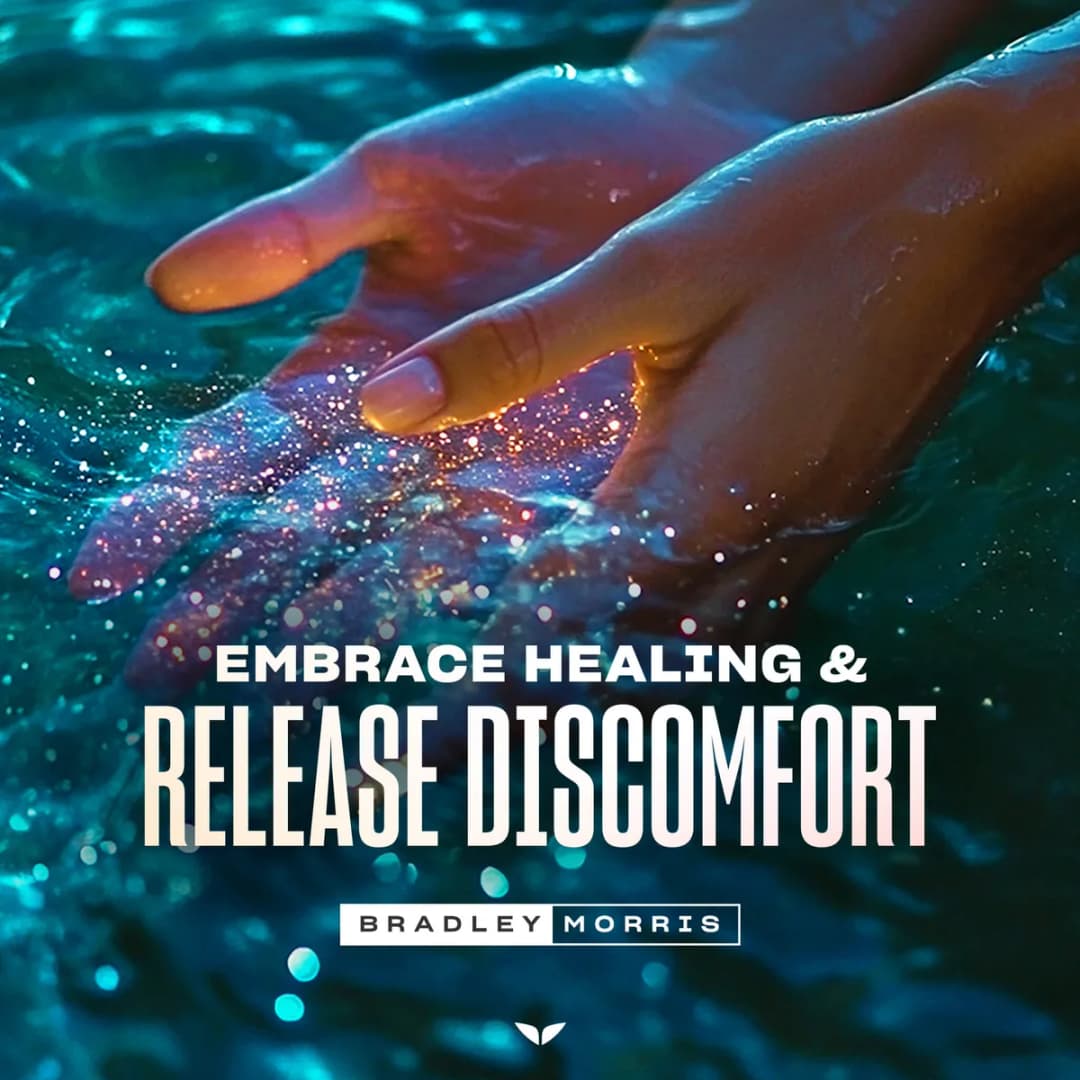
Embrace Healing and Release Discomfort
Turn toward the ache you've been carrying, hear what it's been saying, and let a new story settle in before sleep.
With Bradley MorrisRated4.8
- Level
- Beginner friendly
- Style
- Guided meditation
- Sound
- Voice only
- Best time
- Night, before rest
About this session
- Eases bodily tension
- Releases stored emotion
- Calms the nervous system
- Builds self-trust
You begin with slow breaths and gentle sighs, then bring your awareness to the place that feels uncomfortable. Bradley Morris guides you to swim toward it, notice the colour around it, ask what message it holds, and surround it with golden light as you exhale.
It suits evenings, when the day has gone quiet and your body is asking to be heard. Come to it when you feel tight, sore or weighed down, and you'd like to meet that feeling with curiosity and kindness rather than resistance.
After the session
01
A softer body
Let tension loosen with each long exhale.
02
A new inner story
Choose a belief that feels truer and kinder.
03
Gratitude for your body
Finish appreciating what your body tells you.
04
Calm before rest
Settle into harmony as the day closes.
Who it’s for
Yes, if…
- Anyone carrying physical discomfort they'd like to approach gently
- People who feel tension or emotion stored in their body
- Those winding down at night who want more than a simple relaxation
- Listeners curious about hearing what their body is trying to say
Not now, if…
- Those looking for an energising or uplifting practice
- People who prefer silent meditation (this is guided)
- Anyone who wants a quick, short reset rather than a slow, inward session
Questions people ask
Still unsure? Ask your assistant anything about this session.
Why does the meditation begin with so many sighs?
The opening breaths are the way in. You inhale slowly through the nose, feeling your belly rise, then let out a gentle sigh through the mouth to calm the nervous system and relax the body. Later you hold the breath at the top for a moment, exhale until you feel empty, and rest your tongue tip on the roof of your mouth for a few nose exhales.
What does it mean to swim toward the pain?
Instead of tensing against the discomfort, you imagine moving toward it with your awareness, a little closer with each exhale. As you near the centre, you notice it is surrounded by a colour. You keep drawing closer until you feel you are inside that colour, knowing you are safe there.
What is the colour for, and what if I don't see one?
The colour is a doorway into the feeling. Once you settle into it, you let it show you an emotion at its centre, and you allow that feeling to surface so you can witness it. The track says you can see or imagine a colour, so picking one that comes to mind is enough.
What do I do when I ask the pain for its message?
You simply listen without judging. You notice the words or story it repeats again and again, like a broken record. Then you ask yourself whether that voice is true or whether it is causing you more pain, and you breathe out into your answer.
How does the new story part work?
You ask what story you would like to tell if you could create your experience now. Then you breathe that empowering, positive story into your cells, into the place where the pain has been held. A golden light surrounds the old pain point, and with each exhale the colour and emotion dissolve.
Why does the session end with gratitude?
After the change, you smile in thanks for the message you received and for your body, which has so much to tell and teach us if we stop to listen. You feel golden light move through your cells, bringing harmony and calm. The last quiet minutes are left for deep breaths, so the subtle changes can settle.