



Guided meditation · 23 min
Mirror Meditation
Look yourself in the eye and say the kind things you usually save for other people.
With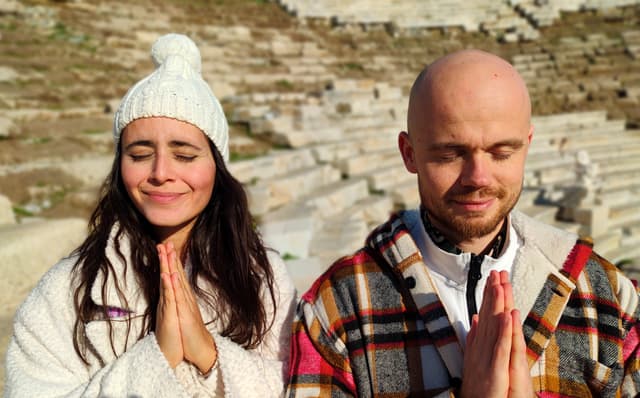 Elif HürdoğanRated4.91.1K plays
- Level
- All levels
- Style
- Guided meditation
- Sound
- Voice only
- Best time
- Early morning or night
About this session
- Softens self-judgment
- Builds self-love
- Grounds the body
- Shifts your mood
Elif Hürdoğan and Phil Geelhoed guide you through a practice done in front of a real mirror. You begin with eyes closed, breathing and growing roots from your tailbone into the earth, then open your eyes and watch what rises: judgment, distraction, the urge to look away. Then comes a facial-expression experiment and a loved one's view of you.
It suits anyone whose inner critic gets loudest at the bathroom mirror, or who rarely says a kind word to themselves. Use it at dawn or late at night, somewhere private where you can sit or stand facing a mirror and have time to feel whatever comes up, including tears.
After the session
01
Kinder eyes on yourself
See yourself without zooming in on flaws.
02
Mood you can steer
Notice how a change of face shifts feeling.
03
Words you needed to hear
Hear forgiveness and support in your own voice.
04
A grounded, safe feeling
Feel rooted, protected and present in your body.
Who it’s for
Yes, if…
- Anyone who avoids their reflection or picks it apart
- People who are hard on themselves and want to practise warmth
- Those starting or ending the day who want a tender ritual
- Anyone ready to say 'I love you' to themselves out loud
Not now, if…
- Anyone who can't get in front of a mirror right now, as the whole practice is built around one
- Those looking for an energising or purely relaxing track
- People who aren't ready for emotions or tears to come up
Questions people ask
Still unsure? Ask your assistant anything about this session.
Why does this meditation need a mirror?
The mirror is the practice itself. After a short breathing and grounding opening with eyes closed, you open them and look at your own face, noticing any judgment, discomfort or urge to look around, and you keep looking anyway. You can sit or stand, as long as you are directly facing your reflection.
What is the facial expression exercise about?
First you make the expression of how you feel right now, or felt before starting, and notice what shifts in your body, memories and thoughts. Then you switch to the expression of the feeling you want, even if you don't feel it yet. The guides point out that posture and body change too, and that you are steering your own chemistry.
What does it mean to see yourself through a loved one's eyes?
You picture a friend, partner, child or even a pet looking at you. They don't see your flaws or your self-criticism; they see your soul, your energy. You stay looking at the same reflection and notice whether it feels different. Then you go a step deeper and look for your soul reflected back from you to you.
What are the affirmations near the end?
While looking into your own eyes, you repeat lines such as 'You are beautiful', 'The universe loves you', 'This world is craving for your gifts', 'I am proud of you', 'I forgive you', 'I support you' and 'I am here for you'. They finish with 'I love you' said several times, followed by a quiet moment to say anything else you want to tell yourself.
Why does it begin with breathing and roots from the tailbone?
Three big breaths let go of whatever doesn't belong to the moment, then you centre in your heart. You then feel roots growing from your tailbone deep into the earth, giving a sense of safety and protection. This steadies you before you start looking at yourself.
What if tears or strong feelings come up?
The opening warns that emotions you've held back may surface, and says this is completely normal. The session doesn't ask you to fix or push them away. As with judgment and distraction, you keep experiencing them and meet them with loving acceptance, and it ends with a big hug for yourself.